
Olympic National Park is one of the most ecologically diverse places in the United States — from coastal tidepools to moss-draped rainforests to high alpine ridges. That diversity creates a haven for wildlife, offering visitors a chance to see animals found almost nowhere else in the country.
Whether you’re joining a Lasting Adventures guided backpacking trip or exploring one of the park’s many unique ecosystems on a day hike, here’s your guide to the animals that call Olympic home — plus tips for viewing them safely and responsibly.
The Most Common Animals You’ll See in Olympic
Roosevelt Elk

These massive, impressive animals are one of Olympic’s signature species. Roosevelt elk love the temperate rainforests of the Hoh, Queets, and Quinault, where they graze on lush vegetation and lounge in river corridors.
When You’ll See Them:
- Early morning or dusk
- Often in small herds
- Sometimes crossing roads or riverbanks
Fun Fact: Roosevelt elk are the largest elk species in North America.
Black Bears
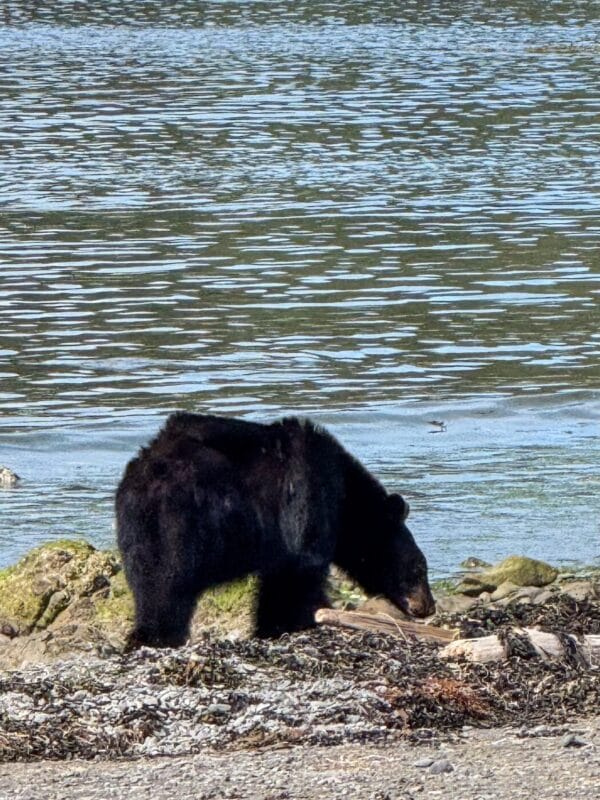
Olympic’s black bears tend to be shy, sticking to forested areas, berry patches, and avalanche chutes. They are active from spring through fall and are experts at staying out of sight — but sightings are still fairly common on quieter trails and even the beach!
Bear Safety Basics:
- Keep at a distance of 50 yards
- Store all food in approved bear canisters
- Make noise when visibility is low
Black-Tailed Deer
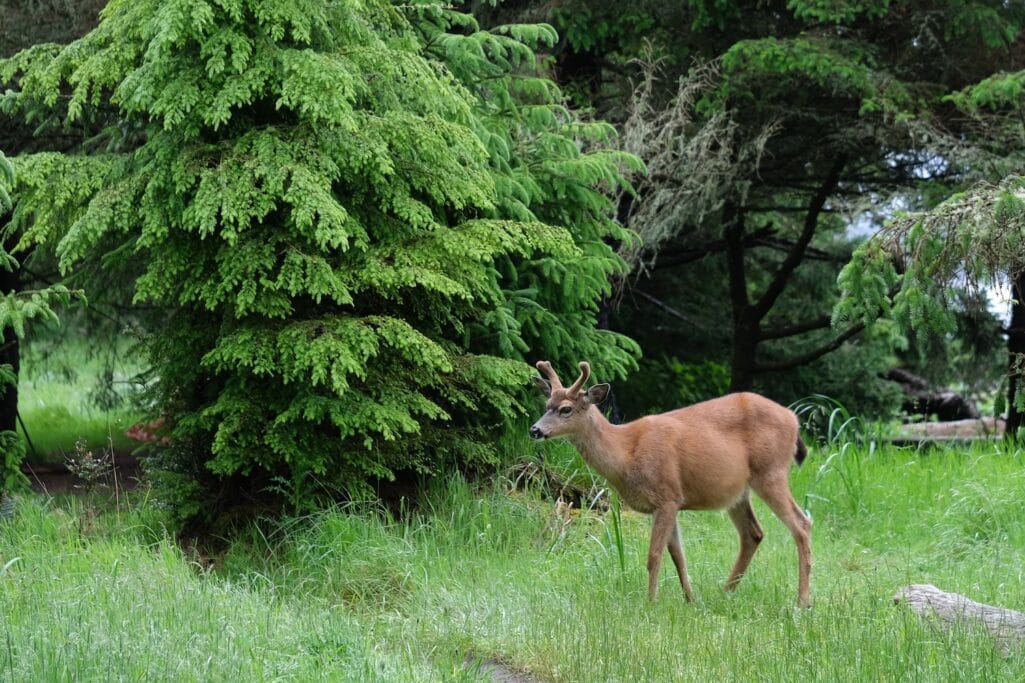
Seen frequently along forest edges, meadows, and even near backcountry camps, black-tailed deer are smaller than mule deer and incredibly graceful.
You’ll often spot them:
- Browsing near streams
- Crossing trails quietly
- Traveling in does + fawns groups
Raccoons

Common near the coast and front-country campgrounds, raccoons are clever foragers with excellent problem-solving skills. They’re fun to watch from a distance — but notorious for raiding unsecured food.
Pro Tip: Always secure your food at camp; raccoons are bold and skilled.
Harder-to-Spot Animals (But Worth Looking For!)
Olympic Marmots

A true Olympic icon — and found only here.
These chunky, charismatic marmots live in high-alpine meadows and rocky slopes. Their loud whistles are a hallmark of summer days in the high country.
Where You’ll See Them:
- Hurricane Ridge
- High alpine meadows along the Bailey Range
- Ridge systems above 5,000 ft
Marmot Etiquette:
- Give them space
- Never feed them
- Keep gear zipped; marmots sometimes chew on salty items
Mountain Goats (Reintroduced Native Habitat Elsewhere)

Mountain goats were historically not native to Olympic but were introduced in the 1920s. After decades of ecological impact, they were relocated in a highly successful wildlife management effort. Today, you’re unlikely to see them in the park — but their story is a notable chapter in Olympic’s wildlife conservation history.
Bobcats

Bobcats are elusive forest predators found across the park. You might catch a glimpse at dawn or dusk as they move silently between hunting grounds.
Look for:
- Quick, low movements across trails
- Tracks in soft mud or sand
- Birds suddenly flushing from the underbrush
River Otters

Often mistaken for sea otters (which do not live in Olympic’s inland waters), river otters are playful, social animals seen in lakes, rivers, and estuaries.
Best Places to Look:
- Lake Crescent
- Sol Duc River
- Quinault & Hoh River corridors
Birds You Might Encounter
Bald Eagles

Olympic’s coastlines and rivers are prime eagle territory. You don’t have to try hard to see this massive bird flying around.
Watch for them perched in tall trees near water or soaring overhead.
Varied Thrush

A rainforest favorite with a haunting, whistle-like call.
You’ll hear them often in the Hoh and Quinault.
Northern Pygmy Owls

Tiny but fierce, and surprisingly active during the day.
Marbled Murrelets

An endangered seabird that nests high in old-growth trees. Olympic is one of their last strongholds.
How to Observe Wildlife Responsibly (Leave No Trace Style)
At Lasting Adventures, we emphasize wildlife respect on every Olympic trip. Here are the basics:
1. Give Animals Plenty of Space
- 25 yards for most wildlife
- 50 yards for bears
- 100 yards for predators
2. Store Food Properly
Especially on the coast and in lowland rainforests, where raccoons and rodents are active.
3. Never Feed Wildlife
Even “just one chip” can harm animals and disrupt natural behaviors.
4. Protect Sensitive Habitats
Stay on established trails in meadows and tidepools — these ecosystems are fragile.
5. Pack Out Everything
Organic waste, such as fruit peels, still attracts wildlife and isn’t native to the ecosystem.
What to Do If You Encounter a Black Bear or Cougar
Black Bear
- Speak loudly
- Back away slowly
- Make yourself look large
- Never run
If a bear approaches your food, stand your ground and make noise.
Cougar (Very Rare)
Cougars avoid people, and sightings are extremely uncommon.
If you do see one:
- Maintain eye contact
- Do not run
- Make yourself big
- Pick up small children
- Back away slowly
Why Wildlife Encounters in Olympic Feel So Magical
From hearing elk bugle through misty river valleys to spotting marmots popping up from alpine burrows, Olympic’s wildlife offers a glimpse into one of the most pristine ecosystems in the Pacific Northwest.
Whether you’re exploring coastal headlands or trekking deep into the high country with our guides, every step offers a chance to witness the park’s wild character up close — always respectfully, always responsibly.
Ready to Meet Olympic’s Wildlife for Yourself?
Join one of our guided hikes or backpacking adventures and experience the rainforest, coast, and alpine world with expert naturalists who know where animals in Olympic thrive.